Event: Salterns Cuisine 2025
Sečovlje Salterns, Strunjan Salterns, Portorož; Slovenia, May 21–October 8, 2025
Piran’s salt-making tradition is an example of centuries of careful and sensitive human interaction with the environment. The delicate balance between human use of the space and respect for natural features is an important source of ecological knowledge and inspiration, upon which our future also depends. The “Salterns Cuisine 2025” event consists of six events at four locations connected to the salterns heritage: May 21, June 18, and July 23 at the Museum of saltmaking, Fontanigge – Sečovlje Salina Nature Park, August 23 – Multimedia Center, Lera – Sečovlje Salina Nature Park, September 17 – Strunjan Salterns, Visitor Center, Strunjan Nature Park, October 8 – Monfort Exhibition Hall, former salt warehouse in Portorož, “Sergej Mašera” Maritime Museum, Piran.
The event aims to raise awareness of the importance and preservation of the salterns and the salt-making heritage. It features a diverse program that includes exhibitions, lectures, discussions, workshops, and other accompanying activities.
The events were organized by the Self-Governing Community of the Italian Nationality in Piran, the “Giuseppe Tartini” Community of Italians in Piran, the Institute for the Protection of Cultural Heritage of Slovenia, the Sečovlje Salina Nature Park, the Strunjan Nature Park, the company Soline d.o.o., the ethnographic group of the “Giuseppe Tartini” Italian Community of Piran – the Salt Workers’ Family (“La Famea dei Salineri”), the Science and Research Center Koper, and the Muzofil Association.
We observed and participated in five events as part of the year-long “Salterns Cuisine 2025” series within the framework of the research project “Grain of Salt, Crystallizing Cohabitation: Salt-Making as Experiential Environmental Wisdom” (ARIS: J6-50196).
At the first event, on May 21, in the southern part of the Sečovlje Salterns known as Fontanigge, participants first explored the nature of the salterns with a guide from the Sečovlje Salina Nature Park. A guided tour of the museum collection was organized at the Museum of Saltmaking. The ethnographic group of the Italian Community “Giuseppe Tartini” Piran, the saltmaking family “La Famiglia dei Salineri,” provided educational workshops for children. Nada Dellore presented the paintings of the art group operating within the Italian Community. Maria Grazia Benussi introduced wild herbs and salterns dishes, particularly “fritaja” made with various herbs and other edible plants, which the participants also tasted.
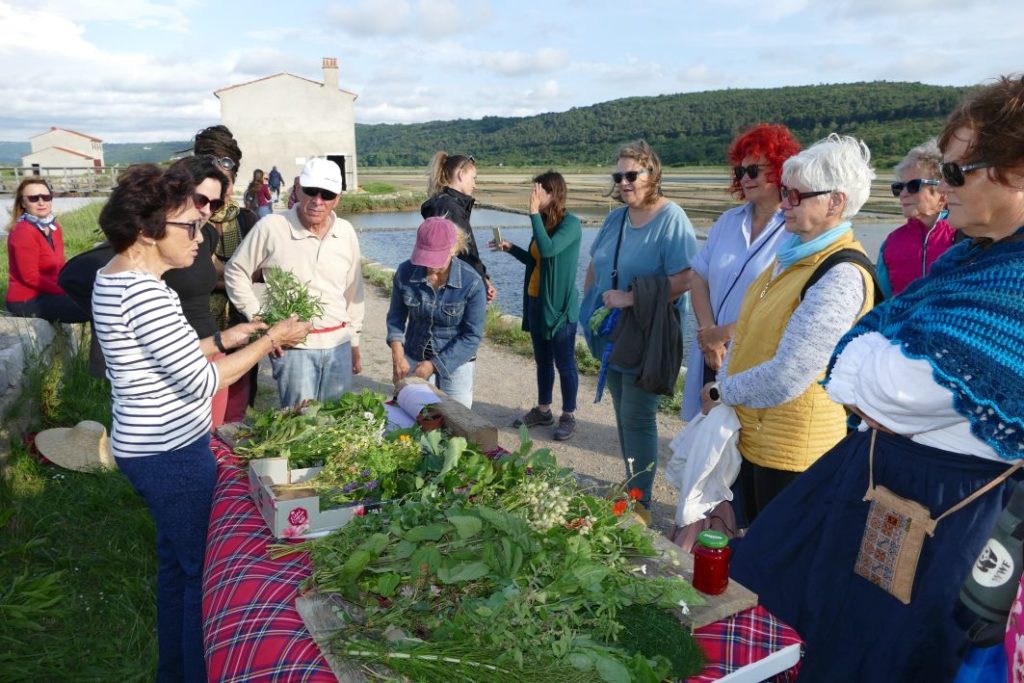
At the second event, on June 18 in the same area, participants first explored the nature of the salterns with a guide from the Sečovlje Salina Nature Park, and then, at the Museum of Saltmaking, they witnessed a demonstration of the preparation of leavened dough and the baking of bread in the bread oven of a saltworks house, as well as an introduction to the bread stamps once used by saltworkers for baking bread. A guided tour of the museum collection was organized, and the ethnographic group of the Italian Community “Giuseppe Tartini” Piran, the salt-making family “La Famiglia dei Salineri,” provided educational workshops for children. This was followed by a screening of the short documentary film “The Story about Salt,” accompanied by a brief lecture by Dr. Primož Pipan of ZRC SAZU (Anton Melik Geographical Institute), co-author of the film, who presented the international ethnographic and restoration volunteer work camps that took place at the Museum of Saltmaking (1999–2014).

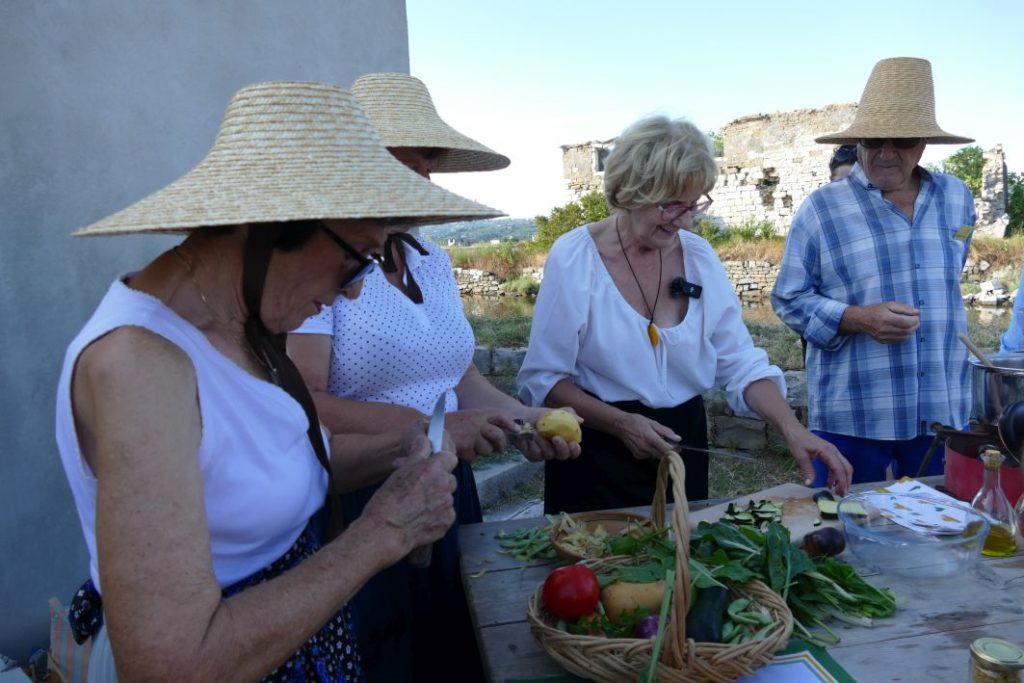
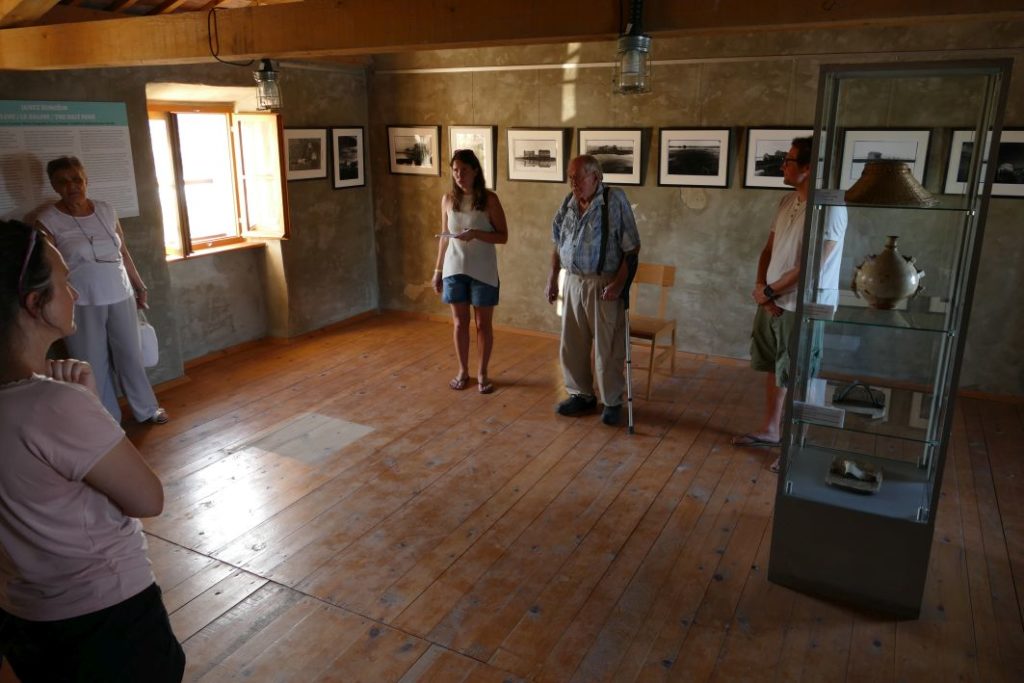
The third event on July 23 was titled “Salterns Through the Lens of Janez Korošin and the Flavors of Homemade Minestrone.” Rozana Bonin demonstrated how to prepare vegetable minestrone using seasonal vegetables from her home garden. Following this, visitors were able to view Janez Korošin’s photography exhibition: Salterns. The exhibition features a selection of photographs taken by photographer Janez Korošin in the Sečovlje salterns in 1974 using an Asahi Pentax SPF camera and TAKUMAR 1:1.8/55 and 1:3.5/24 lenses. Janez Korošin has been involved in photography since he was seventeen and has been active in various photography associations, including the Šolt Ljubljana Photography Group. He has participated in numerous solo and group exhibitions at home and abroad and has received many awards for his work. In 1977, the Photographic Association of Yugoslavia awarded him the title of Master of Photography. In 1996, he received the Janez Puhar Award from the Photographic Association of Slovenia for his lifetime achievement in photography. In 1974, when Fontanigge had already been abandoned for seven years, Janez Korošin took a series of black-and-white photographs. The exhibited landscape and detailed photographs of individual buildings, salt fields, and other salterns elements constitute an important visual record of the state of the abandoned Fontanigge in the 1970s. They cover the salterns areas of the Giassi and Picchetto canals with their characteristic branches – the so-called “cavanas.” The photographs depict Fontanigge in the autumn light, when the sun was very low. “In the summer, such photographs cannot be taken due to the high sun and glare,” the master photographer confided to us, having personally honored us with his visit. The gentleman turned the venerable age of 90 in August. He emphasized that when photographing the salterns, he was always in pursuit of a black-and-white composition accompanied by the golden ratio. Visitors then toured the museum collections and participated in traditional children’s and social games prepared for all generations by the ethnographic group of the Italian Community “Giuseppe Tartini” Piran, the salt-making family – “La Famiglia dei Salineri.” The event concluded with a tasting of various types of minestrone: vegetable, bean with pasta, and broad bean. Visitors also sampled two desserts, known as busolai and zaletti.
At the fourth event, the Salt Workers’ Festival on the Feast of St. Jerome on August 23 and 24, a lecture by Marko Bonin from the Koper Regional Museum titled “Ownership Structures in the Sečovlje Salterns at the Beginning of the 20th Century” was held on Saturday, August 23, in collaboration with the research project, Dr. Maja Bjelica from the Science and Research Center Koper moderated a discussion on salt production with Diego Lazar, head of the salt production team at SOLINE Pridelava soli, d.o.o. The ethnographic group of the Italian Community “Giuseppe Tartini” Piran, the Salt-Making Family – “La Famiglia dei Salineri” – presented the salt-makers’ “Marenda” in the salt fields of the Municipality of Piran.
At the sixth event, on October 8 at the Monfort Exhibition Hall, a former salt warehouse in Portorož managed by the “Sergej Mašera” Maritime Museum in Piran, Dr. Flavio Bonin from the “Sergej Mašera” Maritime Museum Piran, had a lecture titled The Development of Salt Warehouses from the Time of the Venetian Republic to Austria-Hungary. This was followed by a musical performance by MuzeFuze, featuring musicians Katerina Kljun and Maja Bjelica from the Muzofil association, who played Istrian tunes from here and there. The event concluded with a lecture by Dr. Daša Ličen of the ZRC SAZU (Institute of Slovenian Ethnology) titled “Ethnological Insights into Istrian Cuisine.” The icing on the cake at the end of the salt season was a tasting of brodet (fish stew).