Governing Cities and Historic Urban Landscapes
Between 17 and 20 June 2026, the international conference CITIES UNDER STRAIN: Rethinking the Ungovernable took place at the IUAV University in Venice as part of the annual conference of the European Urban Research Association (EURA). The conference addressed the challenges of urban governance in a time of climate, social, economic and geopolitical change, and sought new approaches to understanding and addressing uncertainty and instability. The focus was on the links between environmental, social and spatial justice, the role of institutions and civil society, and the integration of different types of knowledge into urban development processes.
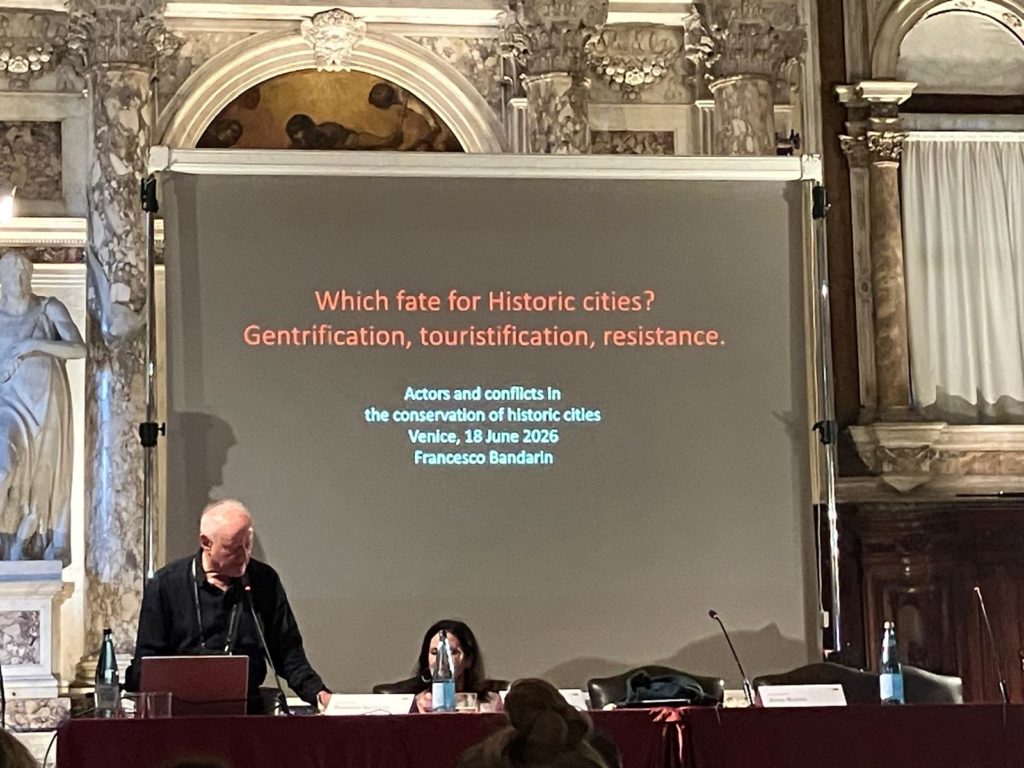
The conference also paid particular attention to the management of heritage cities and historic urban landscapes. On 19 June 2026, the keynote lectures were delivered by Prof. Maria Gravari Barbas (Université Paris 1 Panthéon-Sorbonne) on Who Owns Heritage? Tourism, Urban Extractivism and the Repoliticisation of Historic Urban Landscapes, and by Francesco Bandarin, former Director of the UNESCO World Heritage Centre, with a lecture entitled Which Fate for Historic Cities? Gentrification, Touristification, Resistance. Both presentations shed light on the current challenges of touristification, gentrification and the management of historic cities in the context of growing social and spatial pressures.
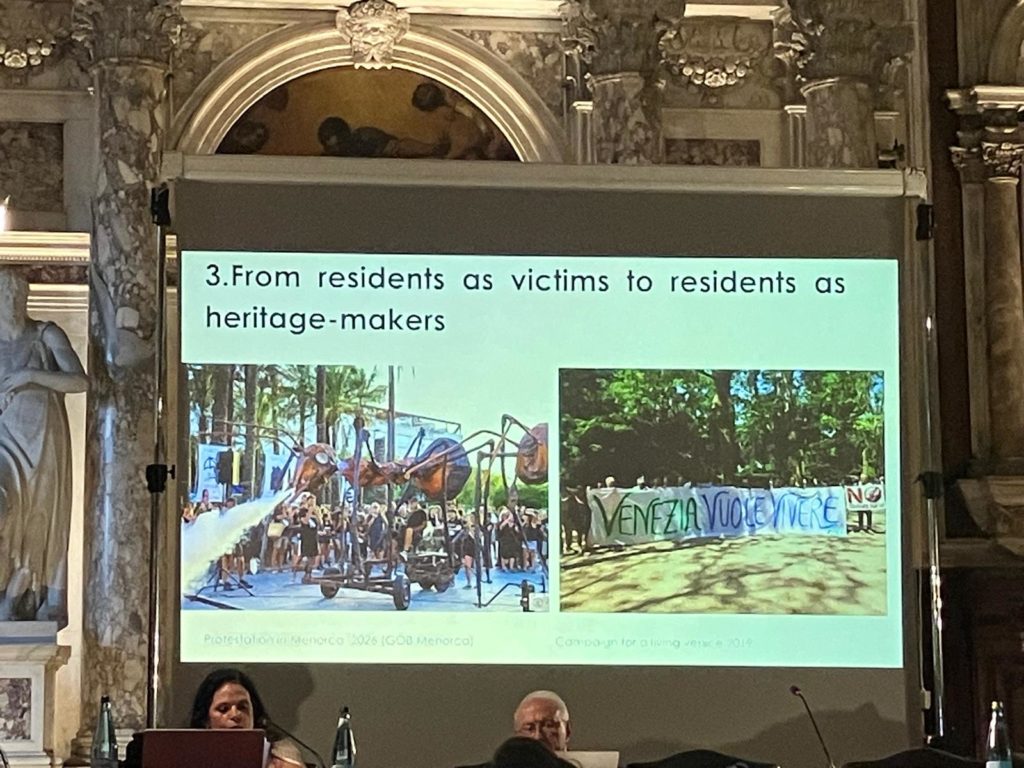
Marko Senčar Mrdaković, a member of the programme group, took part in the ‘Heritage under Overtourism’ session, where he presented the findings of his doctoral research on the management of social inequalities in the historic urban landscape of Koper. The discussion in the session addressed various aspects of the impacts of mass tourism on heritage towns, including through presentations on the ‘vicious circle’ of heritage towns, spatial justice in the context of endangered heritage, the transformations of historic city centres under the influence of excessive tourism, inclusive placemaking, the perspectives of children in the historic centre of Venice, and participatory approaches to exploring the stories of local communities beyond the authorised heritage discourse.